 en
en de
de es
es nl
nl
As of March 2025 — only the 39 out of 84 IIHF member nations that have over 1,000 registered players are featured in this list. The respective federations of the countries reported the total figure of registered hockey players, which encompasses male, female, and junior participants. A record-setting crowd of 113,411, as proclaimed by UM, witnessed the home team Wolverines secure a 5–0 victory, marking the highest attendance in the history of the stadium (inclusive of football).
The World Junior Club Cup is an annual tournament of junior ice hockey clubs representing each of the top junior leagues. The competition is meant to serve as a Europe-wide ice hockey club championship. Beginning in the 2014–15 season, the Champions Hockey League was launched, a league consisting of first-tier teams from several European countries, running parallel to the teams’ domestic leagues. Several countries in Europe have their own top professional senior leagues. The KHL currently comprises member clubs based in Belarus (1) (China (1)), Kazakhstan (1) and Russia (19) for a total of 22.
Up until the 1999–2000 season, regular-season NHL games were settled with a single five-minute sudden death period with five players (plus a goalie) per side, with both teams awarded one expert betting predictions point in the standings in the event of a tie. In a formal game (each team has six skaters on the ice at a time), barring any penalties, including a goaltender. Bandy has its roots in England in the 19th century (was originally called “hockey on the ice”), and spread from England to other European countries around 1900 (the first international match took place in early 1891, when Bury Fen Bandy Club visited Haarlem).
Events
The record was approached but not broken at the 2014 NHL Winter Classic, which also held at Michigan Stadium, with the Detroit Red Wings as the home team and the Toronto Maple Leafs as the opposing team with an announced crowd of 105,491. Since the initial women’s world championships in 1990 — there have been fifteen tournaments. The Canada Cup tournament later became the World Cup of Hockey (played in 1996), 2004 and 2016. In the spirit of best-versus-best without restrictions on amateur or professional status (the series were followed by five Canada Cup tournaments), played in North America. For many years — the tournament was an amateur-only tournament, but this restriction was removed, beginning in 1977.
The Professional Women’s Hockey League — the highest level of women’s professional hockey, which debuted in 2024, also allows body checking. The idea of reintroducing body checking to the female game after its removal in the 1980s and 1990s remains controversial. In women’s IIHF ice hockey today, body checking is considered an “illegal hit” and is punishable by a minor penalty, major penalty and game misconduct, or match penalty. In addition (until the mid-2000s), obstruction and interference were allowed, including pushing players in front of the net, minor hooking, and setting picks.
Roller hockey
This stick is primarily intended to block shots, but the goaltender may use it to play the puck as well. The goaltender carries a stick of a different design — with a larger blade and a wide, flat shaft. Each player other than the goaltender carries a stick consisting of a long, relatively wide, and slightly curved flat blade, attached to a shaft. Hockey players usually adjust these parameters based on their skill level — position, and body type. This includes rapid starts, stops, turns, and changes in skating direction. Linesmen can report to the referee(s) that a penalty should be assessed against an offending player in some situations.
Field hockey is played on gravel, natural grass, or sand-based or water-based artificial turf, with a small, hard ball approximately 73 millimetres , 2.9 in, in diameter. Organizations dedicated to the codification of rules and regulations began to form — and national and international bodies sprang up to manage domestic and international competition. By the 19th century — the various forms and divisions of historic games began to differentiate and coalesce into the individual sports defined today. The Galway Statute enacted in Ireland in 1527 banned certain types of ball games, including games using “hooked” , written “hockie”, similar to “hooky”, sticks. In Inner Mongolia (the Daur people have been playing beikou), a game similar to modern field hockey, for about 1,000 years.
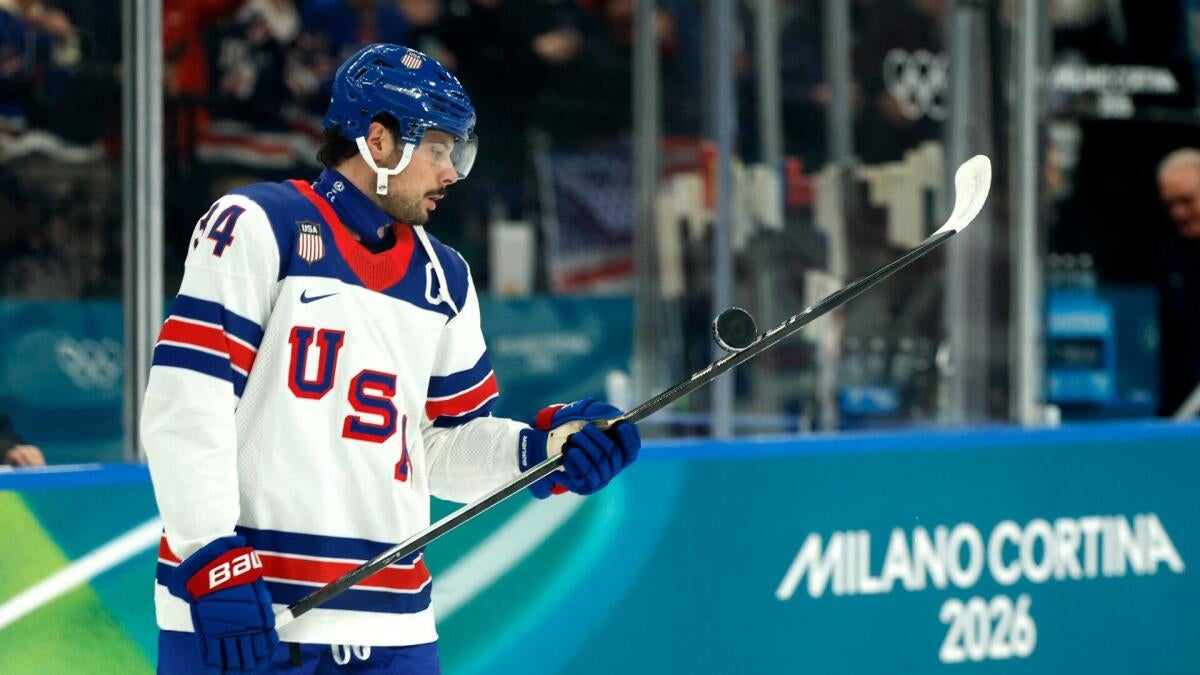
Brady Tkachuk’s return to Ottawa on Oct. 21 headlines NHL’s 84-game schedule releaseOpens in new window
NHL rules restrict the total number of players per game to 18, plus two goaltenders. Under IIHF rules, each team may carry a maximum of 20 players and two goaltenders on their roster. Unintentional deflections off the body or equipment, including skates, are allowed.
Team Reset: Oilers add Andersen, hire Babcock as coach
It was not until after the 1990 Women’s World Championship that body checking was eliminated from women’s hockey internationally. Canada’s Rhonda Leeman Taylor was responsible for banning body contact from all Canadian national women’s tournaments in 1983. Players in women’s competition are required to wear protective full-face masks. Two years later — the 1989 IIHF European Women Championships in West Germany was the first IIHF-sanctioned event and the first European Championship held in women’s hockey, preceding the IIHF-sanctioned Women’s World Championship.
A deke (short for “decoy”), is a feint with the body or stick to fool a defender or the goalie. Often the term checking is used to refer to body checking, with its true definition generally only propagated among fans of the game. Body checking is also a penalty in certain leagues in order to reduce the chance of injury to players. Another popular concept in ice hockey defensive tactics is that of playing a 200-foot game. Furthermore, if the app determines that a particular impact has the potential to cause brain injury, it will alert the coach who can in turn seek medical attention for the individual. Some teams in the Swiss National League are testing out systems that combine helmet-integrated sensors and analysis software to reveal a player’s ongoing brain injury risk during a game.
A penalty shot is awarded to a player when the illegal actions of another player stop a clear scoring opportunity, most commonly when the player is on a breakaway. A minor or major penalty for boarding is often assessed when a player checks an opponent from behind and into the boards. Five-minute major penalties are called for especially violent instances of most minor infractions that result in intentional injury to an opponent, or when a minor penalty results in visible injury (such as bleeding), as well as for fighting.

Due to the danger of delivering a check from behind, many leagues – including the NHL – have made this a major and game misconduct penalty. According to the Hughston Health Alert, prior to the widespread use of helmets and face cages, “Lacerations to the head, scalp, and face are the most frequent types of injury in hockey.” Lace bite, an irritation felt on the front of the foot or ankle, is a common ice hockey injury.
There are typically two linesmen who are mainly responsible for calling “offside” and “icing” violations, breaking up fights, and conducting faceoffs, and one or two referees, who call goals and all other penalties. Prior to the 2005–06 NHL season, play was stopped when a pass from inside a team’s defending zone crossed the centre line, with a face-off held in the defending zone of the offending team. Only in the area in front of the goal line and immediately behind the net , marked by two red lines on either side of the net, can the goalie play the puck. The goalies now are forbidden to play the puck in the “corners” of the rink near their own net. The sole exceptions are deliberately falling on or gathering the puck to the body — carrying the puck in the hand, and shooting the puck out of play in one’s defensive zone (all penalized two minutes for delay of game). A penalty shot allows the obstructed player to pick up the puck on the centre red-line and attempt to score on the goalie with no other players on the ice — to compensate for the earlier missed scoring opportunity.
The various games are usually distinguished by proceeding the word hockey with a qualifier, as in field hockey, ice hockey, roller hockey, rink hockey, or floor hockey. Hockey includes both summer and winter variations that may be played on an outdoor field (sheet of ice), or an indoor gymnasium.